
A Simple Fact That Says More Than You Think
In a language full of contradictions, silent letters, and broken rules, one word quietly stands out.
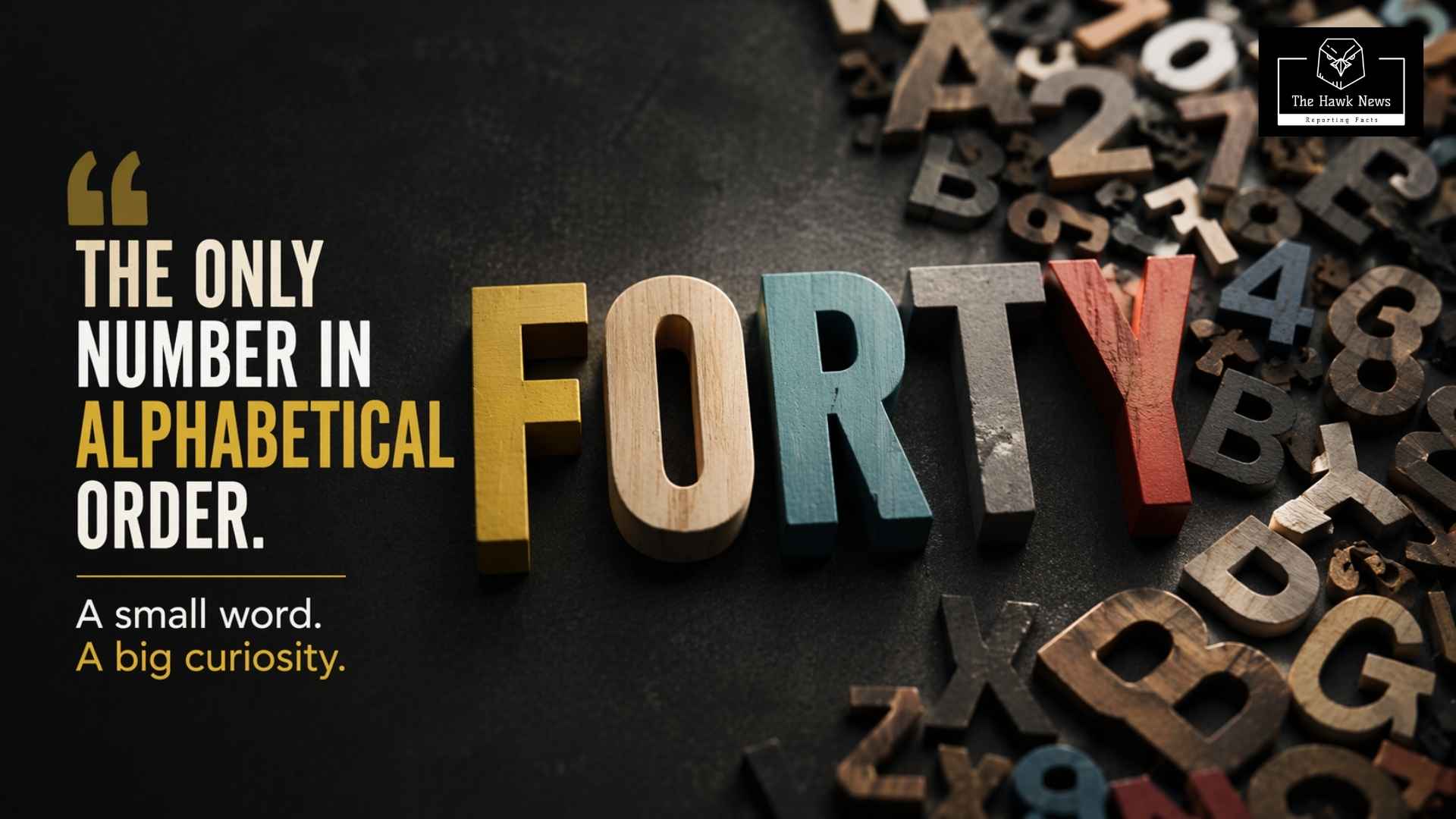
“Forty.â€
At first glance, it’s just a number. Ordinary. Forgettable.
But look closer and you’ll find something strangely satisfying.
It is the only number in English whose letters appear in alphabetical order.
F → O → R → T → Y
Perfectly aligned. Effortlessly structured.
Almost… intentional.
A Rare Moment of Order in English
English is not a language known for discipline.
- “Knife†starts with a silent k
- “Queue†carries four unnecessary letters
- “Rhythm†somehow works without traditional vowels
It’s messy. It’s unpredictable. It’s beautifully chaotic.
And yet, right in the middle of this disorder, sits “forty†a word that follows a rule no one asked it to follow.
It doesn’t try to stand out.
But it does.
Coincidence or Design?
Here’s the truth:
There’s no grand rule that made “forty†special.
No hidden system. No linguistic masterplan.
It’s a coincidence formed over centuries as language evolved, shifted, and adapted through usage, culture, and time.
But that doesn’t stop our minds from pausing.
Because humans are wired to notice patterns.
Even accidental ones.
The Brain’s Obsession With Patterns
We don’t just see patterns we need them.
Order gives us comfort. Structure gives us meaning.
So when we come across something like “forty,†it feels important. Significant. Almost symbolic.
But is it?
Or is it just our brain assigning meaning to something random?
Not every pattern has purpose. But every pattern captures attention.
And in today’s world, attention is everything.
Why Facts Like This Go Viral
Facts like “forty†thrive for one reason:
They’re quick, surprising, and oddly satisfying.
They don’t demand deep thinking but they reward curiosity.
In a fast-scrolling digital world, these micro-moments of discovery act like mental dopamine:
- Easy to consume
- Easy to share
- Easy to remember
And suddenly, a simple word becomes a conversation.
Language Was Never Meant to Be Perfect
Here’s what makes this even more interesting:
English has no central authority controlling its structure.
It evolves through people through mistakes, adaptations, and cultural shifts.
That’s why:
- “Eleven†and “twelve†break numerical patterns
- “One†becomes “first†instead of “onethâ€
- Spellings often defy logic
Language isn’t built on perfection.
It’s built on usage.
Which makes “forty†even more fascinating not because it follows a rule…
But because it does so accidentally.
The Bigger Picture
“Forty†isn’t important because it’s unique.
It’s important because it reminds us how we think.
We search for order in chaos.
We assign meaning to coincidence.
We pause at patterns even when they don’t matter.
And sometimes, that says more about us than it does about the word.
The Final Thought
In a world that often feels unpredictable, even a small moment of order can feel satisfying.
Maybe that’s why “forty†sticks with us.
Not because it’s extraordinary
But because, for a brief moment, it makes chaos look organized.